A memo for Kim
Kim, you should be launching a new fake-door test every single day.
Not weekly. Not when an idea is ready. Every day. Use AI for the landing page, the ad, the copy, the photos, the sign-up flow. The marginal cost of trying a new product is now roughly zero. Behave accordingly.
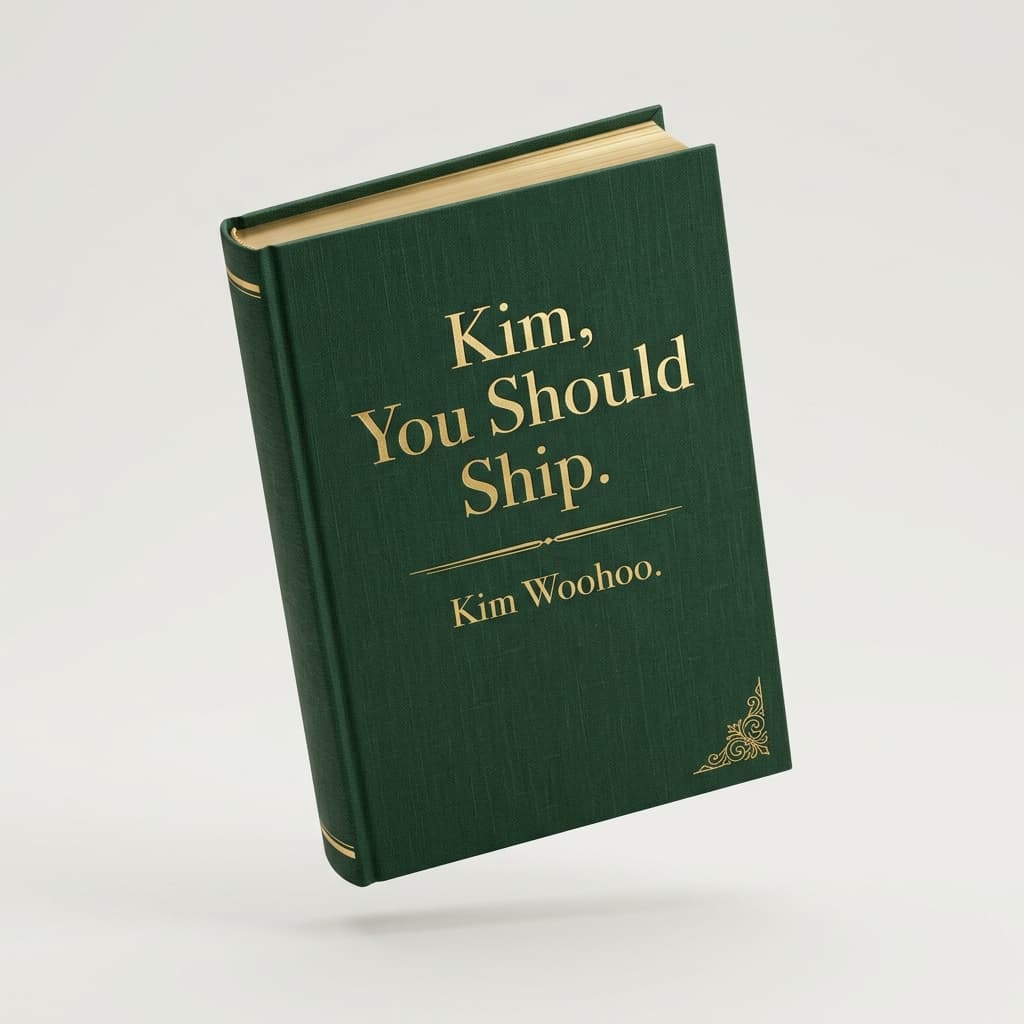
Fig. 1. The book does not exist. This is a fake door for the book. If 300 people click "buy" on the next page, the book will exist by Sunday.
01 / Why daily, not weekly
Weekly is a learning rate of 52. Daily is 365. Same year, seven times the signal.
A fake-door test costs almost nothing now. The only meaningful input is the speed at which you generate, run, and read them. If you ship one a week, you get 52 reads a year. If you ship one a day, you get 365. That is not a marginal improvement. That is a different company.
Daily shipping is also a forcing function on decisiveness. When you have until Friday, you polish. When you have until 6pm, you choose. The ideas you reject teach you almost as much as the ones you launch. Polish kills both signals.
02 / What a fake-door test is
A door with nothing behind it. Yet.
A fake-door test is a landing page for a product that does not exist. A clear photo, a price, a buy button, and a sign-up form. People who click are told the product is coming soon and asked to leave an email or a deposit. The whole point is that you learn what people actually want by watching what they actually click.
You do not need the product. You do not need the supplier. You need a page, a price, and a thousand visitors. If they convert, you build. If they do not, you learned in 90 minutes what a year of focus groups would not tell you.
The book at the top of this page is, itself, a fake door. There is no book. There is a green hardcover, a title, an author, and the soft hum of a thousand potential pre-orders. If they materialise, we will ghostwrite the thing in a weekend.
03 / The cost collapse
What used to take a week now takes a coffee.
Landing page
Before: 2 days, 1 designer
Now: 12 min, 1 prompt
Product photo
Before: 1 day, $400 shoot
Now: 3 min, 1 model
Ad creative
Before: 1 day, $250
Now: 8 min, 4 variants
Copy
Before: Half a day, 1 writer
Now: 5 min, redrafted ten times
Sign-up flow
Before: 1 day, 1 engineer
Now: 20 min, no code
Analytics wiring
Before: Half a day
Now: Built in, free
The throttle on your team used to be production cost. It is now decision cost. The bottleneck is no longer making the page. The bottleneck is choosing which page to make. That is a problem of will, not of resources.
04 / Fast
Other people, with worse tools, did harder things faster.
Patrick Collison keeps a list at patrickcollison.com/fast. It is a quiet, brutal collection of projects finished in absurdly little time. Skyscrapers, airports, moon missions, programming languages, vaccines. None of them had AI. Most of them had committees, weather, war, and material shortages.
You have none of those problems. You have a laptop and a credit card. Read the list below and then look at your roadmap.
- 90 days
BankAmericard
Dee Hock was given 90 days to launch the BankAmericard (which became Visa), starting from scratch. He signed up more than 100,000 customers in that window.
- 143 days
P-80 Shooting Star
Kelly Johnson and his Skunk Works team designed and delivered the first jet fighter used by the USAF in 143 days.
- 134 days
Apollo 8
On 9 August 1968 NASA decided Apollo 8 should go to the Moon. It launched 134 days later, on 21 December 1968.
- 410 days
The Empire State Building
Started and finished in 410 days. At completion it was the tallest building in the world.
- 366 days
Disneyland
Walt Disney's idea of The Happiest Place on Earth went from ground to opening day in a single year.
- 60 days
The Spirit of St. Louis
Donald Hall and Charles Lindbergh designed and built the plane in 60 days. They worked out the fuel load using a globe and a piece of string at the San Diego Public Library.
- 197 days
Marinship
Telegram received 2 March 1942. Site picked the next day. Proposal pitched on 9 March. Approved ten minutes into the meeting. First ship delivered 15 September.
- 491 days
The Pentagon
Project approved on a Thursday evening. Initial drawings done by Sunday. Construction finished in 491 days. Brehon Somervell's standard answer to "when do you need it": "the day before yesterday."
- 92 days
Tegel Airport
Built mid-Berlin Airlift. Planning started July 1948. Ground broken 5 August. First aircraft landed 5 November. A full airport in three months.
- 234 days
The Alaska Highway
1,700 miles of military roadway built in 234 days, connecting eastern British Columbia to Fairbanks.
- 793 days
The Eiffel Tower
Built in 2 years and 2 months. Tallest building in the world for the next 40 years. About $40m in today's dollars.
- ~18 months
Treasure Island, San Francisco
An entire 400-acre island built in the middle of the bay between 1935 and March 1937 to host the Golden Gate International Exposition.
- 290 days
The iPod
Tony Fadell hired late January 2001. Steve Jobs greenlit the project in March. Contract manufacturer hired April. Product announced October. First unit shipped November.
- 6 weeks
Amazon Prime
Amazon started building the first version of Prime in late 2004. Announced it on 2 February 2005. Six weeks, end to end.
- 10 days
JavaScript
Brendan Eich wrote the first prototype in May 1995, in ten days. It shipped in beta the following September.
- 3 weeks
Unix
Ken Thompson wrote the first version of Unix in three weeks.
- 17 days
Git
Linus Torvalds started Git on 3 April 2005. It was self-hosting four days later. Seventeen days in, Linux 2.6.12-rc3 shipped using it.
- ~3 months
Xerox Alto
Built because Chuck Thacker bet a case of wine he could ship a futuristic computer in three months. First Altos rolled out 1 March 1973.
- 930 days
Boeing 747
Program started March 1966. First 747 rolled out 30 September 1968. About two and a half years from decision to finished aircraft.
- 1,173 days
USS Nautilus
The US decided to build the world's first nuclear submarine in July 1951. It entered service in September 1954.
- 12 months
Shenzhen
Between 1998 and 1999, Shenzhen added one million residents. A 22% population increase in a single year.
- 45 days to first dose
COVID-19 vaccine (Moderna)
SARS-CoV-2 genome published 10 January 2020. Moderna finalized the vaccine sequence three days later. First batch shipped to the NIH for clinical trials on 24 February.
A fake-door test takes 90 minutes. The Pentagon took 491 days. Brendan Eich wrote JavaScript in ten. There is no version of your roadmap that justifies shipping one product page a week.
05 / Ideas you could ship before lunch
Eight doors you could open today. By yourself.
These are not theoretical. Every one of them maps to a real business doing real revenue. The only thing missing is the AI version, the better landing page, or the smaller niche. You do not need a co-founder. You do not need a deck. You need a Shopify store, a Stripe key, and four hours.
Pick one. Open the door. See who walks through.
- 01
A custom song for someone you love
They fill in a five-question form (name, occasion, three memories, vibe). An AI writes the lyrics. Suno or a similar model produces a real-sounding song in their requested genre. Delivered as a private link and a downloadable MP3.
$59 standard, $129 for a duet, $299 for a "live band" arrangement.
BuildHave OpenClaw build the site, deploy it to Vercel, and wire Stripe checkout. A short intake form, one webhook to an AI music API, an email automation that sends the finished track.
- 02
The $299 “One Perfect Match” dating service
Not a dating app. Pay once. Take a deep 40-minute questionnaire. An AI reads it against a private pool of pre-vetted singles in your city and matches you to one person. You both get a single warm intro. No swiping, no inbox.
$299 for one introduction. $499 for three a year. Refund if nobody is found within 60 days.
BuildHave OpenClaw build the site, deploy it to Vercel, and wire Stripe for the $299 payment. A long questionnaire, an LLM that scores fit on a shared rubric, a human-in-the-loop concierge sending the intro email. Launch with one city and one waitlist.
- 03
An AI-illustrated Father's Day book
Upload one photo of dad and three sentences about him. AI illustrates a 16-page cartoon hardcover where dad is the hero. Ships in 7 days, printed by Blurb or Lulu.
$79 hardcover. $129 leather edition. $39 PDF.
BuildHave OpenClaw build the site, deploy it to Vercel, and wire Stripe checkout. A single AI image prompt chain (character sheet then 16 panels), automatic order forwarding to Blurb's print API. Wonderbly built a $25-45M business doing a version of this without AI.
- 04
A custom eulogy you write at 2am
You answer ten questions about the person. The model writes a beautiful, dignified, three-minute eulogy that sounds like you wrote it. Comes back in fifteen minutes, printable as a card.
$49 standard, $99 with a phone consult, $199 with a recorded voiceover read by a professional.
BuildSingle landing page, Stripe checkout, one model call, one PDF generator. The whole thing fits in a weekend.
- 05
Your year, as a coffee table book
Hand it your camera roll. AI picks the best 200 photos, writes a year-in-review with captions in your voice, and prints it as a linen hardcover annual. People want a physical record they did not have to make.
$149 a year. Subscription, billed every December.
BuildiCloud / Google Photos API connection, a curation model, an LLM caption pass, Blurb print fulfillment. Annual gift cycle compounds.
- 06
AI-personalized perfume in a glass vial
Five questions. A favorite memory. A photo of a place. The model picks notes from a fixed library of 24 base scents. A small lab mixes and ships in a 30 ml vial with their name on the label.
$89 a vial. $149 for a duo with your partner.
BuildHave OpenClaw build the site, deploy it to Vercel, and wire Stripe checkout. A fixed back-end recipe map, one contract perfumer (there are dozens of indie labs that will do small runs). No need to invent the scent technology.
- 07
A real newspaper from the day they were born
Historic Newspapers has been doing this for decades, selling original physical newspapers from the day a person was born. You can do the AI version: a fully reconstructed broadsheet with real news from that day, their name in a headline, printed and shipped.
$59 standard, $129 framed.
BuildWikipedia + news archive API for the date, an LLM to write the headlines in period voice, a single InDesign-style template, print-on-demand fulfilment via Gelato.
06 / Stupid ideas with serious money
Every one of these would have lost a focus group.
These are brands a serious marketer would have killed on a whiteboard. Canned water. Bar soap. A stool for your toilet. Cereal with thirteen grams of protein. They are now businesses with hundreds of millions of dollars in annual revenue, mostly sold through a Shopify store and an Amazon listing.
None of them had a moat at launch. None of them had institutional retail. What they had was a single sharp idea, a punchy landing page, and a willingness to look stupid in public for long enough to be right.
Historic Newspapers
historic-newspapers.com
Posts you a real newspaper from the day you, or someone you love, was born.
Multi-decade business. Books from $69, framed editions $200+.
No new technology. They built a beautifully merchandised gift around an archive that already existed. The only thing they sell is nostalgia, shipped.
Songfinch
songfinch.com
A custom song written and recorded for the person you love, by a real musician.
Songs from $179. Featured on Shark Tank. Reportedly thousands of songs delivered per month.
Pre-AI, they used freelance songwriters. Now an AI version of this is a weekend build at one tenth the cost.
Wonderbly
wonderbly.com
Personalized children's books where your kid is the main character.
3M+ books sold. Estimated $25–45M annual revenue.
Built before AI image generation existed. With current models, a one-person team could replicate it in a weekend.
Cameo
cameo.com
Pay a celebrity to record a personalized video for someone.
Once valued at $1B. Has since fallen, but proved the category.
They proved people will pay $50 to $5,000 for 30 seconds of someone famous saying happy birthday. No physical product. Just a webform and a payment processor.
Liquid Death
liquiddeath.com
Canned water in a tallboy that looks like a craft lager.
$333M retail sales (2024). $1.4B valuation.
Nobody needed another bottled water. They sold the can and the attitude, not the water.
Dr. Squatch
drsquatch.com
Bar soap for men, marketed like beef jerky.
$400M+ revenue. Acquired by Unilever for $1.5B (2025).
A solved category. They re-framed it as masculine grooming and rode a single viral ad to the moon.
Squatty Potty
squattypotty.com
A small plastic stool that goes under your toilet.
$260M+ lifetime retail. 5M+ units sold.
One animated unicorn ad. Then a Shopify store and Amazon listing. That is the entire stack.
Death Wish Coffee
deathwishcoffee.com
Coffee marketed as the strongest legally allowed.
$100M+ annual revenue by 2023.
From $3M to $100M in eight years. One Super Bowl ad they won in a free contest. Otherwise: Shopify, a story, and a logo.
Poo-Pourri
poopourri.com
A spritz you spray on the water before you poop.
Hundreds of millions over its lifetime. Over 4M units sold annually.
One YouTube ad called "Girls Don't Poop." 40M views. A bottle. A bathroom. A direct-to-consumer empire.
Olipop
drinkolipop.com
Soda that is good for your gut.
$400M+ run rate (2024). Valuation $1.85B.
Walmart and DTC in parallel. They tested 30 flavors as fake doors before picking the four that became the brand.
Magic Spoon
magicspoon.com
Sugary-tasting cereal that is actually high protein.
Sold direct from a Shopify store at $39 for a four-box variety pack.
No grocery aisle. No big distributor. Two founders, one Shopify store, an absurd price point that worked.
Jibbitz
crocs.com/jibbitz
Little plastic charms you stick in the holes of a Croc.
Acquired by Crocs in 2006 for $10M. Now a core revenue line.
Sheri Schmelzer made them at her kitchen table for her daughters. Within months Crocs had bought the company.
07 / The stack to run all of this
Five tools. A credit card. No engineer.
Storefront
Shopify
$39/month. Live store in 20 minutes. No code.
Print on demand
Printful / Printify
Mugs, totes, tees, posters, hoodies. Zero inventory. Order arrives, supplier prints, supplier ships.
Landing pages
Framer / Webflow / a Next.js template
A single page, a buy button, a photo. Ten minutes if you reuse the template. The book at the top of this page took eleven.
Ads
Meta + TikTok
$30 daily test budget per door. Run for 48 hours. Read the CTR. Keep or kill.
Visuals
Generative image models
Photoreal product shots, lifestyle shots, packaging mockups. From a one-line prompt. No photographer.
Analytics
Built into Shopify + Meta
Click-through, add-to-cart, deposit. You only need three numbers to decide.
Every brand in the section above started with a version of this stack. None of them had a custom platform. None of them had a roadmap. They had a Shopify store, a print supplier or one factory, and a meta ads account on autopilot. The constraint is not the tools. The constraint is the number of doors you are willing to open per week.
08 / The asymmetry
Twenty-nine of thirty
will flop. The one that hits
pays for the next hundred.
30
Doors opened in a month. The cost of all thirty is a rounding error against one good ad campaign.
29
Will quietly disappoint. Each one teaches you something a brief never could.
1
Will outperform everything you have shipped this year. You will not have predicted which one.
This is the entire game. You are not picking winners. You are buying lottery tickets at a price so low that the math only works if you are buying every day. Stop trying to be right. Start trying to be fast.
09 / The ask
So, Kim.
What are you going to ship today?
Not this week. Not after the next sync. Today. By the time you finish reading this sentence, your competitors have shipped something half as good and twice as fast. Catch up by sundown.